
Touring Caravan Insurance Guide For Beginners
Suffolk Caravans Blog
Caravan & motorhome storage, sales, servicing & container storage.
Near Ipswich in Suffolk.
Call Our Office - 01473 622 917
A straightforward guide to caravan insurance, cover levels, security requirements and common mistakes for first-time and inexperienced caravan owners.
What Every First-Time Caravan Buyer Should Know About Insurance
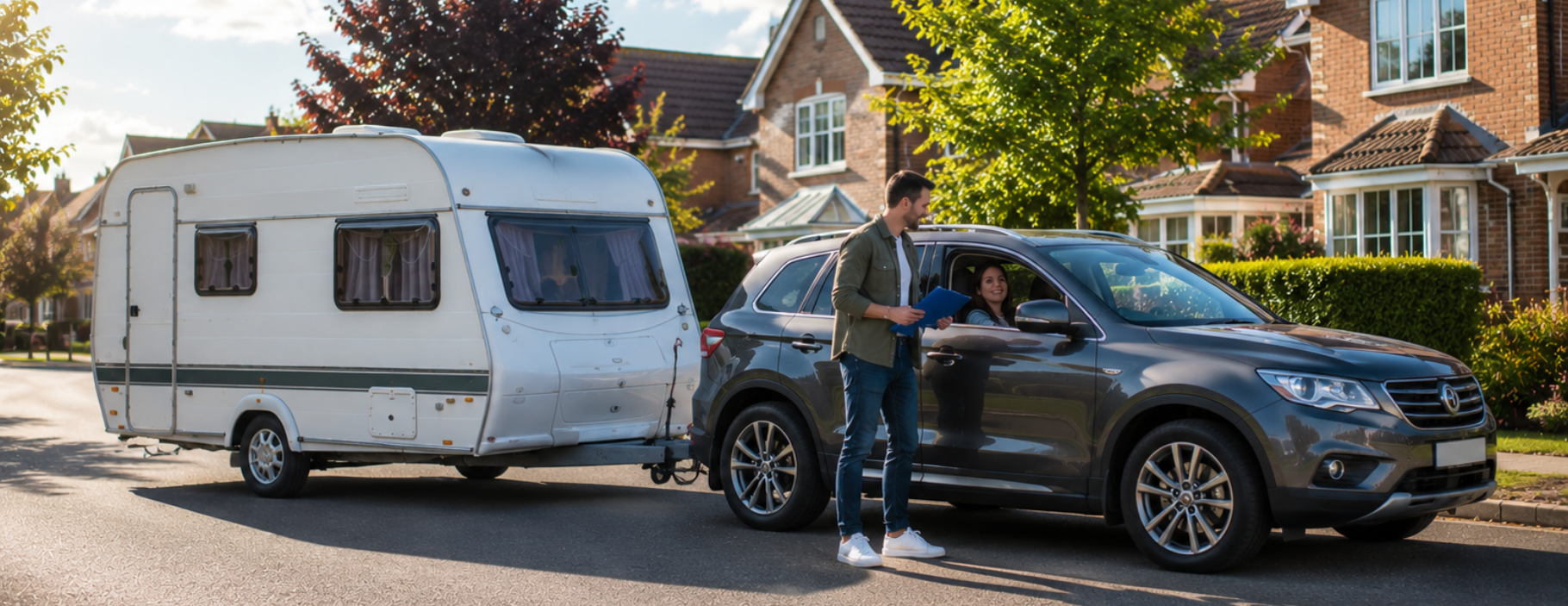
Before buying a first caravan, most people spend plenty of time comparing layouts, weights, tow cars and running costs. Insurance often receives far less attention—which is when expensive misunderstandings can happen.
- Do you legally need caravan insurance?
- Does your car insurance protect the caravan while towing?
- Will your home insurance cover anything inside it?
- Should you choose new-for-old or market-value cover?
- Which security devices must you use?
These are sensible questions, particularly if you have never owned a touring caravan before.
Understanding the basics before requesting quotes can help you compare policies properly, insure the caravan for the right amount and avoid discovering an important exclusion only after something has gone wrong.
This guide explains the main points in plain English. It provides general information rather than personal insurance advice. Policies differ, so always read the insurer’s current policy wording and ask for clarification if anything is unclear.
Quick answer: Touring caravan insurance is not normally a legal requirement in the UK, but your car insurance is unlikely to cover loss of or damage to the caravan itself. A separate policy can protect against risks such as theft, accidental damage, fire and storm damage. Check the valuation basis, security conditions, storage address, excesses and exclusions before buying, the cheapest quotation may not provide the cover you expect.
Quick Navigation
- Do You Legally Need Touring Caravan Insurance?
- Car Insurance and Caravan Insurance Are Different
- What Can Touring Caravan Insurance Cover?
- Does Home Insurance Cover a Caravan?
- How Much Cover Do You Need?
- New-for-Old or Market-Value Cover?
- Avoiding Underinsurance
- Security Requirements and Policy Conditions
- CRiS Registration and Used-Caravan Checks
- Can Secure Storage Affect Caravan Insurance?
- Common Exclusions and Limits
- Optional Extras Worth Considering
- How to Compare Caravan Insurance Policies
- Monthly or Annual Payments?
- When Should You Review Your Cover?
- First Caravan Insurance Checklist
- Frequently Asked Questions
- Final Thoughts
1. Do You Legally Need Touring Caravan Insurance?
No. Unlike a car or motorhome used on the road, there is normally no legal requirement in the UK to insure a touring caravan.
However, that does not mean going without cover is risk-free.
Even an older starter caravan may represent several thousand pounds. Newer and more highly specified models can cost considerably more. Without suitable cover, the owner may have to meet the full cost if the caravan is stolen, destroyed by fire, damaged in an accident or affected by severe weather.
For many owners, caravan insurance is a practical way to protect an asset they could not easily afford to repair or replace themselves.
2. Car Insurance and Caravan Insurance Are Different
This is one of the biggest areas of confusion for first-time owners.
Car insurance will often provide third-party liability protection while a caravan is being towed. In simple terms, this may cover your legal liability if the caravan causes injury or damage to somebody else while attached to the insured tow car.
It is unlikely to cover damage to the caravan itself or the belongings inside it.
Your car policy may not cover:
- Theft of the caravan
- Accidental damage to the caravan
- Fire, flood or storm damage
- Vandalism
- Caravan contents and equipment
- Damage while the caravan is stored or pitched
The precise position depends on your motor policy. Before towing, tell your car insurer that you intend to tow a caravan and ask what is and is not covered.
Also check that your breakdown policy will recover both the tow car and caravan if a problem occurs.
For towing weights, equipment and road rules, read our Beginner’s Guide to Caravan Towing and 10 Practical Checks to Stay Legal.

3. What Can Touring Caravan Insurance Cover?
Cover varies between providers. Depending on the policy and options selected, touring caravan insurance may include:
- Theft or attempted theft
- Accidental damage
- Fire, flood and storm damage
- Vandalism
- Damage while towing, pitched or stored
- Third-party or public liability
- Contents and personal belongings
- Awnings and caravan equipment
- Emergency accommodation
- European touring for a stated period
Do not assume every item is automatically included. A policy may have separate limits for the caravan, contents, awning and equipment.
Certain belongings; including cash, jewellery, electronic devices or items used for work, may have low limits or may be excluded.
Public liability is also worth checking carefully. This can protect you if the caravan causes injury or property damage while it is detached, parked or pitched, but the circumstances and limits vary between policies.
4. Does Home Insurance Cover a Caravan?
Usually not in full.
Some home insurance policies may protect certain personal belongings while they are temporarily away from home. However, limits and exclusions commonly apply, and the policy is unlikely to insure the caravan itself.
There may also be restrictions on:
- How long belongings can remain away from home
- Items left unattended
- Theft where there is no evidence of forced entry
- High-value belongings
- Camping and caravanning equipment
Check the wording of your own home policy. Do not assume that “contents away from home” automatically includes everything kept in a caravan.
5. How Much Cover Do You Need?
A £3,000 starter caravan and a £30,000 caravan present very different financial risks, but both need to be valued correctly.
Consider the cost of replacing:
- The caravan itself
- Permanently fitted equipment
- Motor movers and other declared accessories
- Awnings
- Aquarolls, waste containers and outdoor equipment
- Personal belongings normally kept inside
Keep purchase receipts, photographs, the caravan’s specification and details of significant accessories. These can help you select suitable cover and support a claim later.
The value you declare must match the basis of cover.
For market-value insurance, this usually means the current cost of buying a comparable used caravan. For new-for-old cover, the required sum may need to reflect the cost of a new equivalent.
6. New-for-Old or Market-Value Cover?
This is one of the most important choices when comparing policies.
New-for-Old Cover
If the caravan is stolen and not recovered, or damaged beyond economic repair, new-for-old cover may provide a new equivalent replacement or a settlement based on that replacement cost.
Eligibility may depend on the caravan’s age, condition, ownership history and the amount insured. Some policies only provide a physical replacement, while a cash settlement may be calculated differently.
Market-Value Cover
Market-value cover is normally based on what the caravan was worth immediately before the loss.
It takes account of factors such as age, model, condition and the cost of a comparable caravan at that time.
Market-value cover can be appropriate for an older caravan, but make sure the insured value remains realistic.
The Financial Ombudsman Service explains that caravan valuations can be harder to establish because fewer specialist trade guides cover them.
Neither option is automatically best for everyone. Compare the likely settlement, eligibility rules, excess and premium, not simply the label used by the insurer.
7. Avoiding Underinsurance
Underinsurance means the amount declared is lower than the value required by the policy.
For example, you may remember to include the caravan’s purchase price but forget a fitted motor mover, upgraded equipment or the replacement cost of an awning.
Under a new-for-old policy, using the caravan’s present second-hand value instead of the cost of a new equivalent can also create a shortfall.
Depending on the policy wording, underinsurance could reduce a claim or change the basis on which it is settled.
Ask the insurer:
- How should I calculate the caravan’s insured value?
- Should fitted accessories be included in that figure?
- Are the awning and contents covered separately?
- What happens if the declared value is too low?
Review the amount after buying expensive accessories and at every renewal.
8. Security Requirements and Policy Conditions
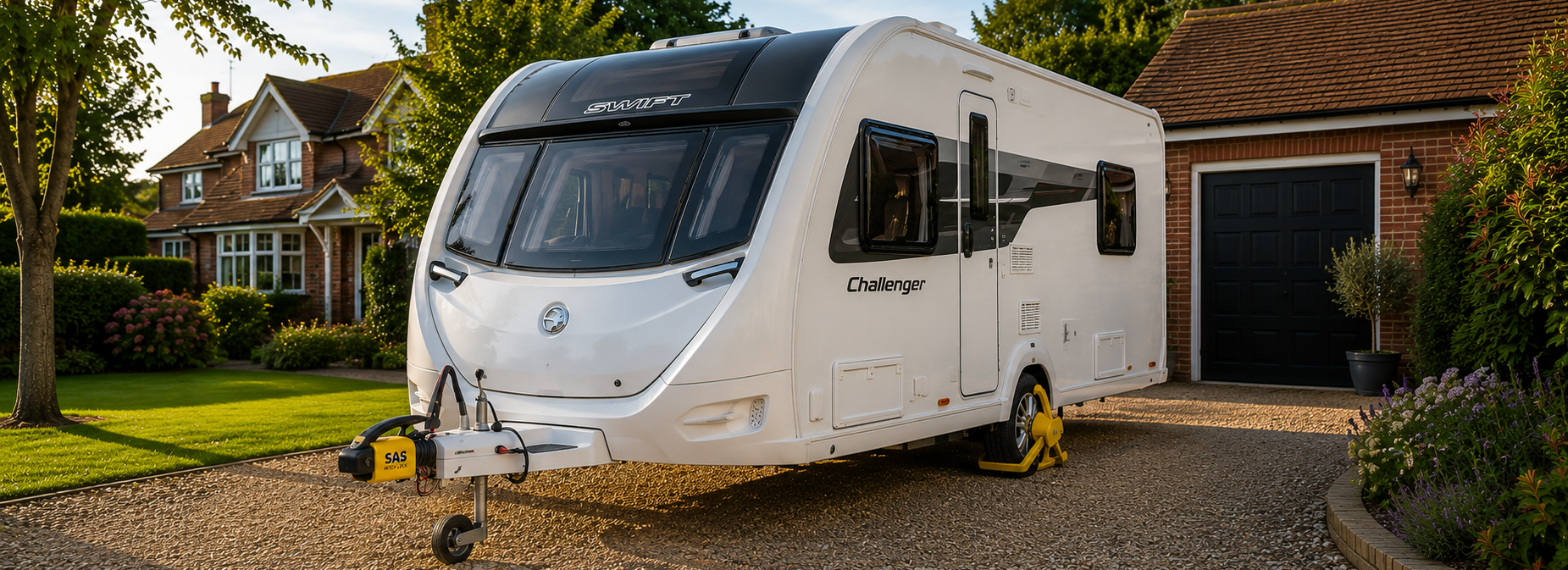
Insurance providers commonly require owners to take specified security precautions. These are policy conditions, not optional suggestions.
Depending on the caravan, storage arrangements and insurer, you may be required to use:
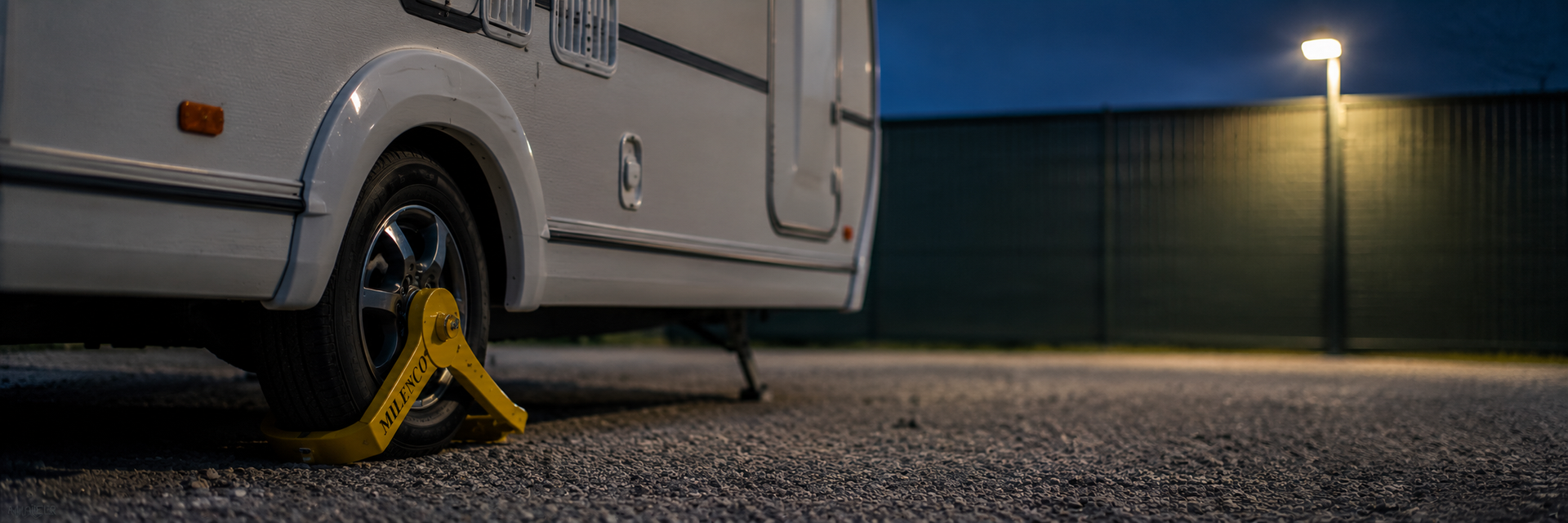
- A particular type of wheel clamp
- An approved hitch lock
- An alarm or immobiliser
- A tracking device with an active subscription
- Secure or accredited storage
- More than one security device when unattended
Check whether a device must meet a named approval standard or appear on the insurer’s accepted-product list.
Owning a wheel clamp is not enough if the policy requires a different specification or says it must be fitted whenever the caravan is left unattended.
Also confirm where the caravan will normally be stored. Tell the insurer before changing the storage location, even temporarily, if the policy requires this.
If you cannot comply with a condition, speak to the insurer before buying the policy or moving the caravan. A failure to meet an important security requirement could affect a later claim.
9. CRiS Registration and Used-Caravan Checks
CRiS is the Central Registration and Identification Scheme for UK touring caravans.
It links a caravan’s unique 17-digit VIN to its registered keeper record and can assist with identification and recovery.
Many insurers may ask for the VIN or CRiS registration details when arranging cover or processing a claim.
When buying a used caravan, an official CRiS Check can identify whether participating records show that it:
- Has been reported stolen
- Has outstanding finance
- Has previously been written off by an insurer
- Is recorded to a registered keeper
CRiS refers to the registered keeper, which is not necessarily the same as the legal owner.
A CRiS Check is therefore an important safeguard, but it should form part of wider purchase checks rather than replace them.
Keep the registration document and VIN details somewhere safe. Do not leave your only record inside the caravan.
10. Can Secure Storage Affect Caravan Insurance?
Yes. Where and how a caravan is stored can affect whether an insurer will offer cover, the security conditions applied and, in some cases, the premium.
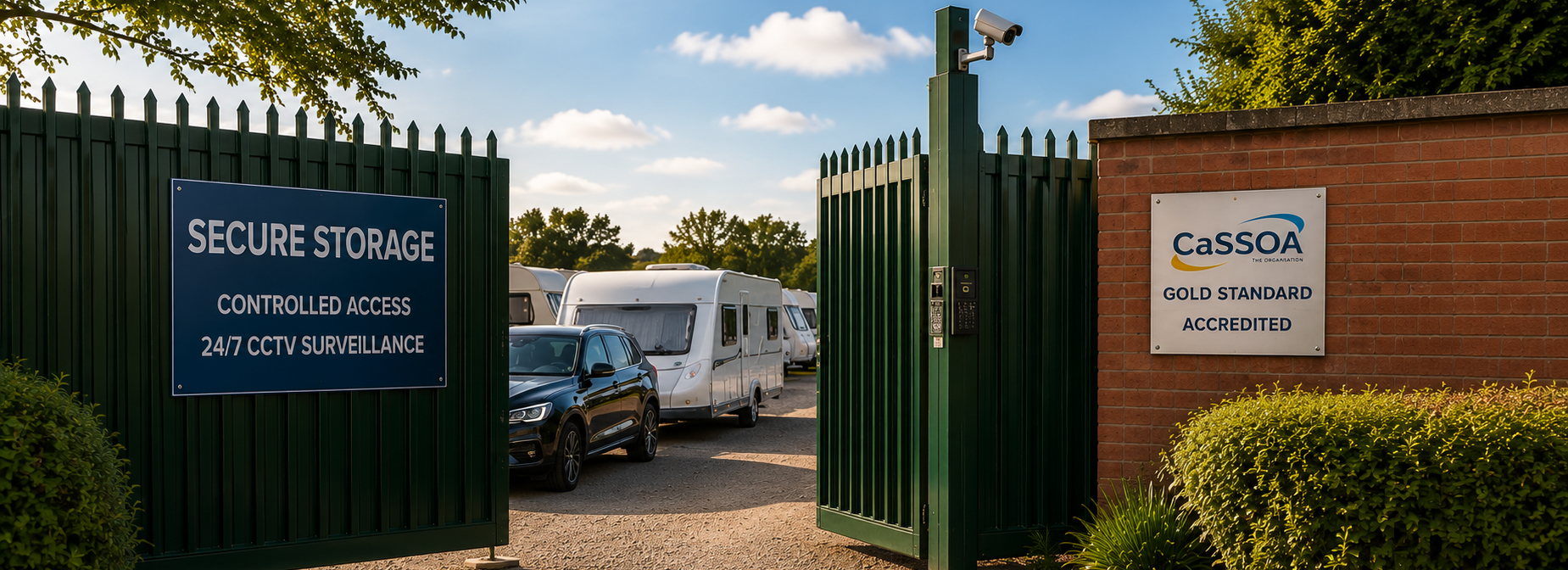
Some insurers recognise the additional security provided by an accredited storage facility.
CaSSOA sites are independently assessed against defined security and operational criteria, and some insurance products offer benefits or discounts for customers using accredited sites.
Suffolk Caravans has held CaSSOA Gold accreditation since 2011. The facility near Ipswich provides CCTV, controlled key-fob entry, on-site staff and convenient 24-hour customer access.
Learn more about secure caravan and motorhome storage at Suffolk Caravans.
CaSSOA accreditation does not guarantee a lower premium from every insurer.
Give the insurer the correct storage-site name, address, postcode and accreditation details, then ask how the arrangement affects the quotation and policy conditions.
11. Common Exclusions and Limits
The headline list of benefits does not tell you everything.
Before buying, look for exclusions and limits relating to:
- Wear and tear or gradual deterioration
- Damp, mildew, rot or water ingress
- Vermin or insect damage
- Mechanical or electrical failure
- Tyre deterioration
- Unsecured or unattended belongings
- Theft without the required security devices fitted
- Commercial use or hiring the caravan to others
- Permanent residence or extended occupation
- Travelling outside the UK for longer than the permitted period
- Storm damage to awnings left erected
This does not mean every policy excludes all these situations. It means they are worth checking because wording varies considerably.
Also compare the excess, the amount you must contribute towards a claim. A lower premium may come with a much higher compulsory or voluntary excess.
12. Optional Extras Worth Considering
Depending on how you use the caravan, useful options may include:
- Emergency accommodation or alternative-hire cover
- European touring extensions
- Legal expenses cover
- Increased contents or awning limits
- Family-member use
- Loss-of-use or holiday-disruption benefits
Breakdown and recovery cover is often separate from caravan insurance.
Confirm that the provider can recover the caravan as well as the tow car and that its size and weight fall within the policy limits.
Only pay for extras that match the way you actually travel.
European cover offers little value if the caravan never leaves the UK, while emergency accommodation may matter more to a family using the caravan for its main annual holiday.
13. How to Compare Caravan Insurance Policies
Start by requesting quotations using the same information and cover level. This makes the comparison fairer.
Look beyond the final price and compare:
- Basis of settlement—new-for-old or market value
- Insured values—caravan, equipment, awning and contents
- Security conditions—exactly what must be fitted and when
- Storage conditions—approved locations and notification requirements
- Excesses—compulsory and voluntary amounts
- Exclusions—situations in which the policy will not respond
- Touring limits—UK and overseas trip durations
- Breakdown cover—included, optional or completely separate
- Claims support—how and when help is available
- Total annual cost—including interest and optional extras
If two policies appear similar, ask each provider to explain the practical difference.
A clear answer before purchase is better than an argument after a loss.
14. Monthly or Annual Payments?
Paying annually is often the simplest option and may cost less overall.
Monthly instalments can make the expense easier to manage, but they may involve interest or finance charges. Check the total amount payable rather than comparing only the monthly figure.
Also ask what happens if you cancel or sell the caravan during the policy term.
Monthly payments do not necessarily mean you are buying insurance one month at a time. You may still be financing an annual policy.
15. When Should You Review Your Cover?
Do not automatically renew without checking that the details remain correct.
Review the policy when:
- The caravan’s value changes significantly
- You add a motor mover, awning or expensive equipment
- You change the normal storage location
- You install or remove a security device
- Another person will use the caravan
- You plan to tour abroad
- Your annual mileage or pattern of use changes
- You sell or replace the caravan
At renewal, check the valuation, limits, excesses and security requirements again.
Insurers can change policy wording, and yesterday’s assumptions may not apply to the new period of cover.
16. First Caravan Insurance Checklist
Before arranging or renewing cover, make sure you can answer “yes” to the following:
- I have checked what my car insurance covers while towing.
- I understand whether the caravan policy is new-for-old or market value.
- I have insured the caravan and fitted equipment for the correct amount.
- I have checked the separate limits for contents and awnings.
- I know the compulsory and voluntary excesses.
- I understand every security condition.
- My wheel clamp, hitch lock, alarm or tracker meets the required specification.
- I have given the insurer the correct storage address.
- I have recorded the caravan’s VIN and CRiS details.
- I have checked the main exclusions.
- I have confirmed the UK and European touring limits I need.
- I have compared the total annual cost of more than one suitable policy.
- I know how to contact the insurer and what evidence to keep if I need to claim.
Keep a copy of the policy, photographs, receipts, VIN, security-device details and insurer contact number with your important caravan records.
Store a backup away from the caravan.
To help you can download and print our Caravan Insurance Checklist PDF.
17. Frequently Asked Questions
Is Touring Caravan Insurance a Legal Requirement in the UK?
No. Separate touring caravan insurance is not normally required by law.
However, your car insurance is unlikely to pay for theft of or damage to the caravan itself, so many owners choose specialist cover.
Does My Car Insurance Cover the Caravan While Towing?
It may cover your liability to other people while the caravan is being towed, but it is unlikely to cover damage to the caravan or its contents.
Check directly with your motor insurer before travelling.
Can I Insure an Older or Low-Value Caravan?
Usually, yes, although available cover and eligibility vary.
Consider whether you could comfortably meet the cost of theft, major damage or third-party liability without insurance.
What Is the Difference Between New-for-Old and Market-Value Cover?
New-for-old cover is intended to provide an equivalent new replacement, subject to the policy’s conditions and insured amount.
Market-value cover reflects what the caravan was worth immediately before the loss.
Will Secure Storage Reduce My Insurance Premium?
It may. Some insurers offer benefits for accredited storage, while others simply treat it as part of their risk assessment.
Provide the exact storage details and ask the insurer how they affect the quotation.
Do I Need a Wheel Clamp and Hitch Lock?
Many policies require one or both, and some specify approved products or additional devices.
Follow the exact wording of your own policy.
Does Caravan Insurance Include Breakdown Recovery?
Not always. Breakdown cover is frequently a separate product.
Make sure it covers both the tow car and caravan and check any size, weight, age or recovery restrictions.
Should I Tell the Insurer If I Move the Caravan?
Yes, if its normal storage address changes.
You should also check the policy before leaving it somewhere different for an extended period, as storage and security conditions may apply.

18. Final Thoughts
Choosing insurance for a first caravan can initially feel complicated. It becomes much easier once you separate the main questions:
- What could happen to the caravan?
- Which of those risks does the policy cover?
- How would a claim be valued?
- Which conditions must you follow?
- What would you have to pay yourself?
The cheapest policy is not necessarily poor, and the most expensive is not automatically the best.
The right policy is one that fits the value of your caravan, the way you use it and where you store it—with conditions you understand and can follow.
A careful hour spent comparing the details can prevent a much more expensive misunderstanding later.
Need Help With Caravan Storage or Ownership?
Suffolk Caravans can help with secure storage, caravan sales and access to trusted independent servicing, repair and valeting specialists based on-site.
Suffolk Caravans
Sheepdrift Farm
Waldringfield Road
Brightwell
Ipswich
Suffolk
IP10 0BJ
Office: 01473 622 917
Email:
info@suffolkcaravans.com
Authoritative Sources and Further Reading
- The Caravan and Motorhome Club: Caravan Insurance and Third-Party Liability
- The Camping and Caravanning Club: The Importance of Insurance
- Financial Ombudsman Service: Caravan and Motorhome Insurance
- CRiS: Registration and Identification
- CRiS: Used-Caravan History Checks
- CaSSOA: Secure Caravan and Motorhome Storage Accreditation
- GOV.UK: Towing With a Car
Insurance products, eligibility, cover levels and policy terms vary and may change. Always check the current policy wording and speak to the provider before purchasing or renewing cover.
You might also like